Why Did Hagia Sophia Become a Mosque? Reading 1000 Years of Byzantine Art History
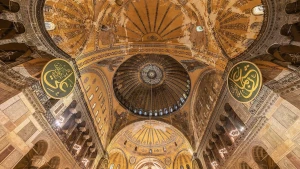
 Explores the history of Byzantine art over 1000 years and the reasons behind Hagia Sophia's conversion into a mosque.
Summary
This article is part of a Western art history series by Professor Kumiko Tanaka of Bunsei University of Art, providing an overview of medieval art, particularly the 1000-year history of Byzantine art. Byzantine art developed in the Eastern Roman (Byzantine) Empire from the 5th to the 15th century and is divided into early, middle, and late periods. Early Byzantine art spans from the 4th century to 843, with significant development in church architecture and mosaics during the reign of Emperor Justinian I in the 6th century. The Hagia Sophia (now Ayasofya), rebuilt in the 6th century, is considered the masterpiece of Byzantine architecture. After the Ottoman Empire conquered Constantinople in the 15th century, the cathedral was converted into a mosque by Muslims. Additionally, the Iconoclasm controversy from the 8th century to 843 greatly impacted art history, resulting in the loss of many icons. The article explains the evolution of Byzantine art and the historical context behind Hagia Sophia's conversion into a mosque.
(Source:SYNCHRONOUS シンクロナス)