"Tate Museum Turner Exhibition: Sublime Painting, Dialogue with Contemporary Art" (The National Museum of Western Art) Opening Report: A Journey in Search of the Sublime from the 19th Century to Today
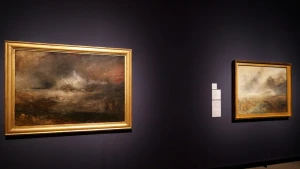
 The National Museum of Western Art in Tokyo opens a Turner exhibition, pairing his sublime paintings with contemporary art.
Summary
The exhibition "Tate Museum Turner Exhibition: Sublime Painting, Dialogue with Contemporary Art" has opened at the National Museum of Western Art in Ueno, Tokyo. It runs until February 21, 2027, curated by Jun Shindo, senior curator at the museum, and will later travel to the Nakanoshima Museum of Art, Osaka (March 13–June 27, 2027). Featuring more than 80 oil and watercolor works from London's Tate, which holds the world's largest Turner collection, alongside contemporary works from Tate, the show is organized into a prologue and seven chapters. Arranged in a loose chronology, it explores how Turner's career and concerns resonate with questions posed by contemporary art. Born in London in 1775, Turner entered the Royal Academy in 1789 and gained recognition in both watercolor and oil, becoming a full academician in 1802 at age 26. After the Napoleonic Wars ended in 1815, he first traveled to Italy in 1819 and also visited France and Germany, producing historical landscapes. His masterpieces include "The Fighting Temeraire" (1839), "Rain, Steam and Speed" (1844), and "Norham Castle, Sunrise" (c.1845). The exhibition's prologue, titled "Dark Room," recreates Turner's practice of making clients wait in a dim room before viewing his works at his private gallery. It includes works reflecting his interest in astronomical light, such as moonlit watercolors and sketches of solar eclipses, showing his constant exploration of natural light. These are juxtaposed with Katie Paterson's "Totality" (2016), a large sphere covered in 10,000 mirror tiles, each engraved with a total solar eclipse image, connecting Turner's era with contemporary art through the phenomenon of the eclipse.
(Source:美術手帖)