What Can Be Done in a Form Other Than a "Japan Pavilion"? The 16th Gwangju Biennale Asakusa Pavilion Roundtable [Part 1] (Interviewer: Hiroki Yamamoto)
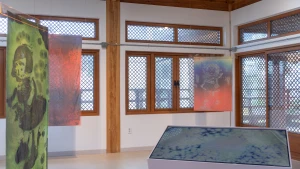
 Four curators discuss their "Asakusa Pavilion" at the 16th Gwangju Biennale, created as an alternative to a national Japan Pavilion.
Summary
At the 16th Gwangju Biennale in South Korea, the Tokyo-based project space Asakusa presented the "Asakusa Pavilion" in pop-up form. The four curators—Koichiro Osaka, Mariko Mikami, Miwa Negoro, and Mika Maruyama—shared a skepticism toward the national pavilion system and sought a form other than a "Japan Pavilion" in Gwangju, a city with a history of democratic movements. The project began when Negoro, during an MMCA residency, was approached by the Gwangju Biennale Foundation to curate a Japan Pavilion; she consulted Maruyama, who then brought in Osaka and Mikami. Asakusa is an independent collective with limited resources, so the team deliberated extensively before participating, but saw it as an opportunity to explore a "pop-up" presentation of Asakusa's work abroad. The four curators, all Japanese-born but not based in Japan and working independently outside large institutions, aimed to critically examine the national framework and reflect their research and activities related to imperialism and colonialism. Part 1 explores themes of "movement" and "transnationality," highlighting personal narratives and the future of curation as seen through the Gwangju practice.
(Source:Tokyo Art Beat)