Opening Report for "Learning from Hōjōki: Small Architecture for Reweaving Life" (21_21 DESIGN SIGHT). Reexamining Contemporary Living through 800-Year-Old "Small Architecture"
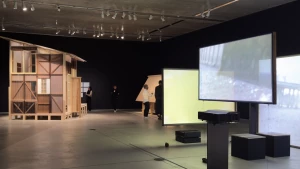
 An exhibition inspired by Hōjōki and directed by architect Tsukamoto Yoshiharu has opened at 21_21 DESIGN SIGHT, using the 800-year-old concept of small living to reexamine contemporary life.
Summary
"Learning from Hōjōki: Small Architecture for Reweaving Life" has opened at Gallery 1 & 2 of 21_21 DESIGN SIGHT in Roppongi, Tokyo, running until January 11, 2027. Directed by architect Tsukamoto Yoshiharu, the exhibition features eight participating artists and groups: Egashira Shin, Ōmuro Yusuke + Kawachōgumi, Kobuchi Yusuke + Nakamura Jun, Hikada Tomoki + Takenaka Corporation + veig, Suda Yoshihiro, 2m26, and Yamaguchi Akira.
Hōjōki is one of Japan's three great essays, written around 1212 by Kamo no Chōmei (1155-1216) during the early Kamakura period. Against a backdrop of repeated disasters, famines, and social instability, it reflects on the impermanence of the world and how to live within it. In the latter part of his life, Chōmei retreated from the court and city to build a one-jō-square (approximately 9 square meters) hermitage on Mt. Hino in Kyoto, living with only the bare necessities. His way of life has been repeatedly referenced by later architects and thinkers. This exhibition takes the concept of hōjō as a scale for reconsidering contemporary living, reimagining modern versions of the hermitage from various perspectives including materials, structure, tools, and relationships with nature. Tsukamoto notes that while the 20th century saw the construction of enormous buildings and the industrial systems supporting them, maintaining these systems while addressing environmental and biodiversity challenges is no easy task—conditions he sees as resonating with those that led Chōmei to withdraw to a small hermitage over 800 years ago.
Gallery 1 presents the historical context of Hōjōki through wall displays of manuscripts, commentaries, and translations arranged chronologically, along with "Hōjō Pilgrimage," which introduces ten figures who lived a hōjō life—including Henry David Thoreau, Matsuo Bashō, and Uchida Hyakken—and a reconstructed version of Chōmei's hermitage based on the descriptions in Hōjōki. Gallery 2 features hermitages of various sizes. Ōmuro Yusuke + Kawachōgumi present a full-scale reconstruction of the storage shed repeatedly depicted by 20th-century private novelist Kawasaki Chōtarō in his works. Kobuchi Yusuke + Nakamura Jun exhibit "Walking Hōjō" (2026), a mobile structure with six legs made primarily from a feed tank, containing a keyboard that resonates through internal pipes like a pipe organ—questioning the relationship between dwelling and place by transforming the home into a movable, music-making structure.
(Source:美術手帖)