Lin Yi-Chi Wins Han Nefkens Foundation's Video Art Production Grant for Asia
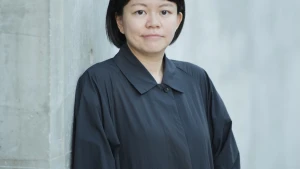
 Taiwanese artist Lin Yi-Chi receives the Han Nefkens Foundation's video art production grant for Asia, awarded $25,000.
Summary
On November 17, 2026, the Barcelona-based Han Nefkens Foundation announced that the Loop Barcelona Video Art Production Grant 2026, which supports the production of new video works by artists of Asian nationality or residing in Asia, has been awarded to Taiwan-based artist Lin Yi-Chi. Lin will receive $25,000 (approximately 3.98 million yen) to support the production of a new work scheduled for completion in August 2027. The grant is a collaboration with ILHAM Gallery in Kuala Lumpur, the Museum of Contemporary Art Taipei, the Museum of Contemporary Art Tokyo, Kunsthaus Zürich, WIELS in Brussels, the Almaty Museum of Arts in Kazakhstan, and the Ludwig Museum in Cologne; the completed work will be presented at these partner institutions in sequence. Born in Taipei in 1986, Lin is interested in how traces of war, militarization, migration, and political regimes in postwar Asian history have shaped everyday life. Through long-term field research and ongoing dialogue, she explores ruptures, silences, and contradictory memories in the process of history being experienced and inherited, working with oral history, sound, video, dreams, and reenactment. In recent years she has focused on diasporic experience and marginalized histories represented by islands such as Kinmen, Matsu, and Green Island, attempting to reconstruct connections beyond nationality, history, and collective memory. Her works have been shown at the International Film Festival Rotterdam, Melbourne International Film Festival, Jogja Biennale, Jakarta Biennale, Taiwan Art Biennale, Taipei Fine Arts Museum, and Jim Thompson Art Center, among others. She received a Special Award at the Taipei Art Awards in 2018 and was a finalist for the Taishin Arts Award for her solo exhibition "Dream of Amber" at FreeS Art Space. The jury praised her ability to take up specific political and historical subjects—including the history of the U.S. military presence in Taiwan—and elevate them beyond individual contexts into broader reflections on power, diaspora, and belonging. They also noted the importance she places on oral history, especially testimonies of elderly women, and her incorporation of different languages and forms of narration as essential elements of video production. Rather than filling gaps in history with definitive narratives, her works embrace ambiguity and contradiction, creating displacements between documentary and fiction, sound and image, and different temporalities. The jury consisted of Han Nefkens, foundation staff, and representatives of the partner institutions. Finalists alongside Lin included Mengyun Han (1989, China), Paravi Paul (1986, India), Peng Zuqiang (1992, China), Gowgrlajaran Rajendran (1993, Malaysia), Real Rizaldy (1990, Indonesia), Mirai Sato (1985, Japan), Leila Stevens (1982, Australia), Santua Tripura (1995, Bangladesh), and Bo Wang (1982, China).
(Source:ART iT)