What Did Postwar Japanese Women Artists "Liberate"? A Report on the "Kaihō" Exhibition at Mudam Luxembourg
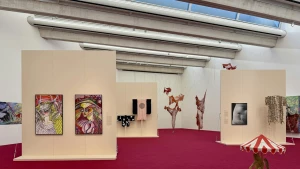
 The "Kaihō" exhibition at Mudam Luxembourg showcases 39 postwar Japanese women artists and explores their liberation.
Summary
The exhibition "Kaihō: Japanese Women Artists after 1945" is on view at Mudam Luxembourg until February 14, 2027. It traces the activities of Japanese women artists from the postwar period to the end of the 20th century through over 120 works by 39 artists, including internationally known figures such as Yayoi Kusama, Yoko Ono, and Atsuko Tanaka, as well as lesser-known artists. Curated by Florence Ostende, who conducted about three years of research, the exhibition is organized into five chapters across two floors. The first chapter, "Witnessing History," features works such as Toshi Maruki and Iri Maruki's "The Hiroshima Panels," which depicts the suffering of atomic bomb victims; Taeko Tomiyama's paintings inspired by Balinese funeral rites, addressing Japanese imperialism; and Mao Ishikawa's photographs taken in 1970s Okinawa, capturing the lives of Black American soldiers and Okinawan women. The exhibition aims not only to reevaluate individual artists but also to reposition postwar Japanese women artists within contemporary society, history, and cross-border artistic exchanges.
(Source:美術手帖)