"The Supreme Masterpiece of Oriental Art" Muqi's Guanyin, Monkey, and Crane: The Awe that Captivated Master Painters like Hasegawa Tōhaku — Special Exhibition "Daitokuji: The Unmatched Zen Monastery of This Realm" Opens at Tokyo National Museum
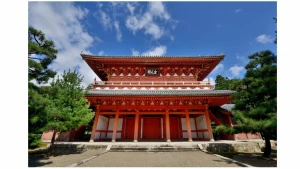
 Tokyo National Museum opens a special exhibition for Daitokuji's 700th anniversary, displaying Muqi's national treasure Guanyin, Monkey, and Crane.
Summary
Daitokuji, a major temple in northern Kyoto, has prospered since its founding in 1326, producing renowned monks and attracting devotion from emperors, warlords, and tea masters like Sen no Rikyū. To commemorate its 700th anniversary, the special exhibition "Daitokuji: The Unmatched Zen Monastery of This Realm" has opened at Tokyo National Museum, showcasing temple treasures from Daitokuji and its subtemples. The exhibition features Muqi's Guanyin, Monkey, and Crane (first period: Oct 14–Nov 8), hailed as "the supreme masterpiece of Oriental art," "the pinnacle of ink painting," and "the Mona Lisa of the East." Designated a National Treasure in 1951, it is rarely shown publicly, and this is its first Tokyo display since the 2017 "Tea Ceremony" exhibition. Muqi was a painter-monk active from the late Southern Song to early Yuan dynasty, with the dharma name Fachang and sobriquet Muqi, from Shu (Sichuan). He served as abbot of Liutong Temple in Hangzhou while excelling in ink painting, mastering advanced techniques of depicting forms through ink gradations and washes. Many of his works flowed to Japan due to the chaotic dynastic transition and active Sino-Japanese Zen temple exchanges. His works arrived in the Kamakura period and were collected by Ashikaga Yoshimitsu in the Muromachi period; Guanyin, Monkey, and Crane bears Yoshimitsu's authentication seal.
(Source:JBpress)