From Monet to Japanese Painting and Crafts: The Sumitomo Harusui Centennial Exhibition Is Now on View at the Sen-oku Hakuko Kan in Kyoto
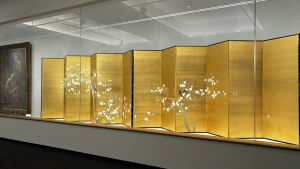
 Marking the 100th anniversary of Sumitomo Harusui's death, an exhibition of his modern art collection, including Monet, Japanese painting and crafts, is on view at the Sen-oku Hakuko Kan in Kyoto until December 20.
Summary
A special exhibition, "The 100th Anniversary of Sumitomo Harusui: A Happy Sumitomo Modern Art Collection," is being held at the Sen-oku Hakuko Kan in Shishigatani, Kyoto, until December 20. The exhibition commemorates the 100th anniversary of the death of Sumitomo Kichizaemon Tomoito (pen name Harusui, 1864–1926), the 15th head of the Sumitomo family. It focuses on the modern art he collected from the mid-Meiji to Taisho periods—including Japanese paintings, Western-style paintings and crafts—and explores his aesthetic sensibilities and the history of how the collection was formed.
The Sumitomo Collection spans a wide range of works, including ancient Chinese bronzes, Chinese and Japanese calligraphy and painting, Western paintings, modern ceramics, tea utensils, and Noh masks and costumes, much of it collected by Harusui, who laid the foundation of today's Sumitomo Group. The exhibition focuses on the two consciousnesses of "the family" and "the individual" behind his collecting, tracing how the collection took shape through his life and purchase history as the roles of Sumitomo family head and personal aesthete intersected.
Born in 1864 to the court noble family Tokudaiji in Kyoto, Harusui studied Chinese and Japanese classics from childhood and grew up close to art. In 1892 he married into the Sumitomo family as an adopted son-in-law and succeeded as head the following year. In 1897 he toured Europe and the United States for about eight months. He purchased Japanese paintings by Tanomura Chokunyu, Murata Koko and Hashimoto Gaho, and, on the advice of his brother Saionji Kinmochi, supported Western-style painters Kuroda Seiki and Yamamoto Hosui. During his Western tour he also purchased Claude Monet's "Parc Monceau" (1876). The exhibition presents Monet's "Parc Monceau" along with Fujishima Takeji's "Happy Morning" (1908) and Ueshima Hozan's "September: Chrysanthemum" from "Twelve Months of Beauties" (1909), among others, and also shows works Harusui once owned but later gave away, tracing the shape of the collection at the time.
(Source:美術手帖)