Kintsugi: Japan's Art of Broken Pottery
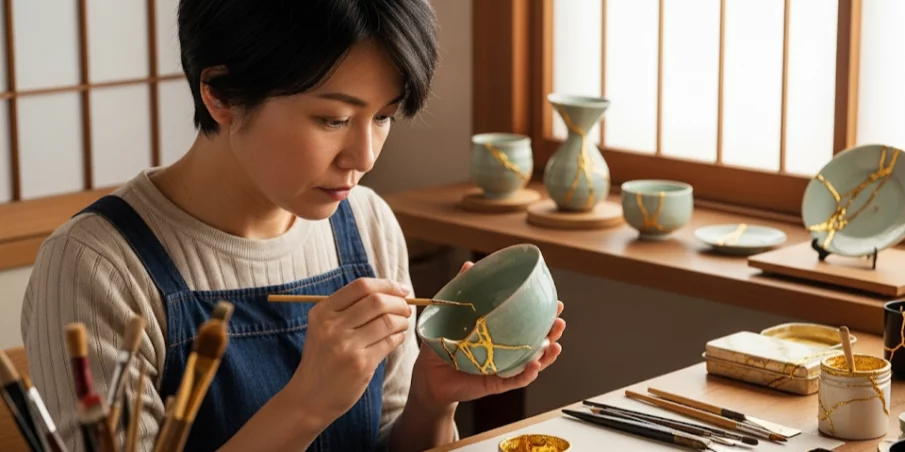
Have you ever dropped a cherished bowl and watched it shatter into pieces, thinking it was ruined forever? What if there was a way to put it back together that didn’t just fix it but made it even more stunning than before? That’s the beauty of Kintsugi, Japan’s art of broken pottery. This ancient practice turns cracks and breaks into golden highlights, celebrating the story behind each imperfection. It’s like giving your pottery a second life, one that’s richer and more meaningful.
As someone who loves handmade items, I find Kintsugi fascinating because it reminds us that beauty isn’t about being perfect. It’s about the journey. In this post, we’ll explore what makes Kintsugi so special, from its origins to how you can try it at home, all while keeping things simple and engaging.
The Rich History of Kintsugi
The Legendary Origin Story
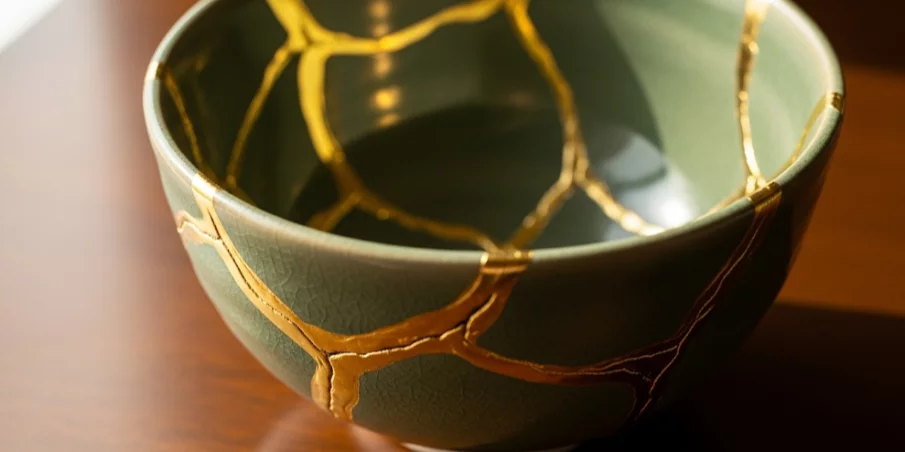
Let’s talk about where Kintsugi came from, because its story is as captivating as the art itself. Back in the late 15th century, during Japan’s Muromachi period, a powerful shogun named Ashikaga Yoshimasa had a favorite Chinese tea bowl that broke. He sent it back to China for repairs, but when it returned, it was held together with ugly metal staples. He wasn’t pleased. That’s when Japanese craftsmen stepped in and experimented with a more elegant solution. They started using urushi lacquer, a natural resin from the lacquer tree, dusted with gold powder to mend the pieces. This not only fixed the bowl but made it look exquisite, with golden seams that caught the light beautifully.
Rise in Popularity Through Tea Culture
This innovation quickly caught on, especially among those involved in the Japanese tea ceremony, where ceramics played a central role. Tea masters appreciated how Kintsugi added character to their vessels, making each one unique. Over time, some collectors even began intentionally breaking valuable pottery just to have it repaired with gold, believing it enhanced the piece’s value. Imagine turning destruction into an opportunity for enhancement.
Kintsugi drew from existing lacquerware traditions, like maki-e, where gold is sprinkled on lacquer for decoration. It wasn’t limited to Japanese pottery either. It was used on items from China, Korea, and Vietnam, showing how adaptable this art form was.
Cultural Expansion and Lasting Legacy
As Kintsugi spread, it became more than just a repair method. It reflected cultural shifts in Japan, where aesthetics intertwined with daily life. By the 16th century, it was common in households and tea houses, symbolizing resilience. Think about a time when you’ve fixed something in your own home, maybe a chipped plate with superglue. Kintsugi takes that impulse and elevates it to an art, reminding us that history adds depth. Today, while the core technique remains the same, modern adaptations make it accessible, but the historical roots keep it grounded in tradition.
The Deep Philosophy Behind Kintsugi
Embracing Wabi-Sabi
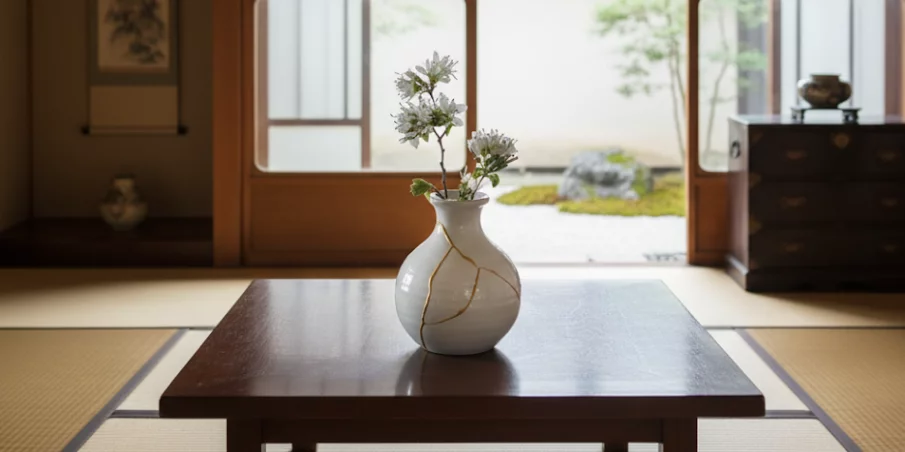
What really draws people to Kintsugi isn’t just the shiny gold. It’s the philosophy that underpins it. At its heart, Kintsugi embodies wabi-sabi, a Japanese worldview that finds beauty in imperfection and transience. Ever noticed how a weathered wooden table has more charm than a brand-new one? That’s wabi-sabi in action, and Kintsugi takes it further by highlighting breaks rather than concealing them. It’s like saying, “Life happens, and that’s okay. Actually, it’s what makes things interesting.”
A Metaphor for Healing
This art form teaches us about acceptance. In a world where we often chase perfection, Kintsugi whispers that flaws are part of the story. The golden lines represent healing, showing that repair can lead to something stronger and more beautiful. It’s tied to concepts like mushin, which means “no mind” or letting go of attachments, and mono no aware, a gentle sadness about the fleeting nature of things. When you mend a broken pot with Kintsugi, you’re not just gluing shards together. You’re acknowledging the object’s history—the meals it held, the hands that touched it, and the accident that cracked it.
Relate it to your own life. Have you ever gone through a tough time that ultimately made you wiser? Kintsugi mirrors that resilience. It’s not about ignoring the pain of breakage but transforming it. In Japanese culture, this philosophy extends beyond pottery to how people approach challenges. For instance, in tea ceremonies, a Kintsugi-repaired bowl might be prized over a flawless one because it tells a tale. It’s a reminder that true value comes from experience, not pristine condition. This mindset encourages mindfulness, urging us to appreciate the present while honoring the past.
Sustainability and Meaning
Diving deeper, Kintsugi promotes sustainability in a subtle way. Instead of tossing out damaged items, it invites repair and reuse, aligning with the idea of mottainai, which means regretting waste. Picture mending your grandmother’s old vase with golden veins. Suddenly, it’s not just fixed. It’s a family heirloom with added layers of meaning. This philosophy resonates because it’s relatable. Who hasn’t felt broken at some point? Kintsugi offers a visual metaphor for personal growth, showing that scars can be sources of pride.
Mastering the Kintsugi Process
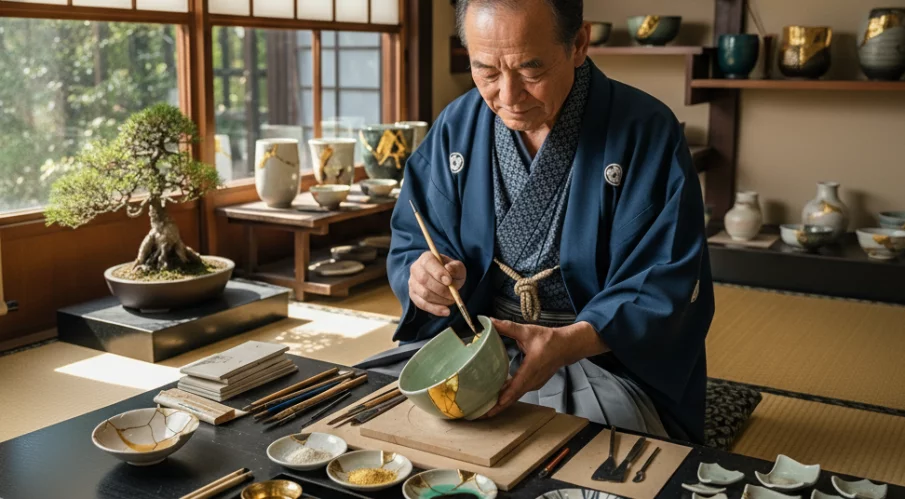
Ready to get your hands dirty? Let’s walk through how Kintsugi is actually done. It’s a patient process, but that’s part of its charm. It forces you to slow down and connect with the object.
The Traditional Process
Traditional Kintsugi uses natural materials, starting with cleaning the broken pieces thoroughly. You want to remove any dirt or old glue so the repair bonds well. Then, you prepare the adhesive, often a mix of urushi lacquer and rice flour or wheat flour to create a putty-like substance called mugi-urushi.
Once the pieces are ready, you apply this mixture along the edges and carefully join them, like piecing together a puzzle. It’s crucial to align them properly because once the lacquer sets, adjustments are tricky. After joining, the pottery needs time to cure, sometimes days or weeks in a humid environment to let the lacquer harden naturally. This waiting period is where the magic builds. It’s not instant gratification, but the results are worth it.
Next comes the beautifying step. You sand down any excess adhesive to smooth the surface, then apply layers of lacquer mixed with red pigment or other bases. Finally, you dust on the gold powder or mix it into the top layer of lacquer. Polishing brings out the shine, revealing those iconic golden veins. There are variations too. For small cracks, you might use a fine brush to apply the lacquer-gold mix directly. If a piece is missing, artisans sometimes fill the gap with lacquer built up in layers or even use a fragment from another vessel for a patchwork effect called yobitsugi.
Modern Adaptations
In modern takes, people often swap traditional urushi for epoxy resin, which is easier for beginners and doesn’t require the same curing time. Epoxy mixed with gold mica powder mimics the look without the fuss of natural lacquer, which can cause skin irritation if not handled properly. Whether traditional or modern, the key is precision and care. Rushing leads to messy results. Imagine working on a simple mug. The break becomes a golden scar, turning it into a conversation starter.
Essential Materials for Kintsugi
Gathering the right tools is half the fun. For authentic Kintsugi, you’ll need urushi lacquer in different forms: ki-urushi for base layers, bengara-urushi for coloring, and so on. Gold powder is the star, but silver or platinum works for a subtler effect. Brushes, spatulas, and sandpaper are must-haves for application and finishing. If you’re going DIY, kits often include epoxy, gold powder, and basic tools, making it approachable without sourcing rare items.
Safety matters too. Urushi can be allergenic, so gloves and good ventilation are smart. For storage during curing, a simple box with damp cloths maintains humidity. These materials aren’t just functional. They connect you to centuries-old traditions, adding a layer of authenticity to your project.
Step-by-Step: From Break to Beauty
Start by assessing the damage. Sort the pieces and plan the assembly. Apply the adhesive sparingly to avoid bulges. After joining, clamp gently if needed, but tape often suffices. Curing takes patience. Traditional methods use a furo box with hot water for humidity. Sanding requires a light touch to preserve the gold. Layering lacquer builds durability, and the final polish reveals the gleam. Each step builds on the last, much like how experiences shape us.
Kintsugi in Everyday Life Today
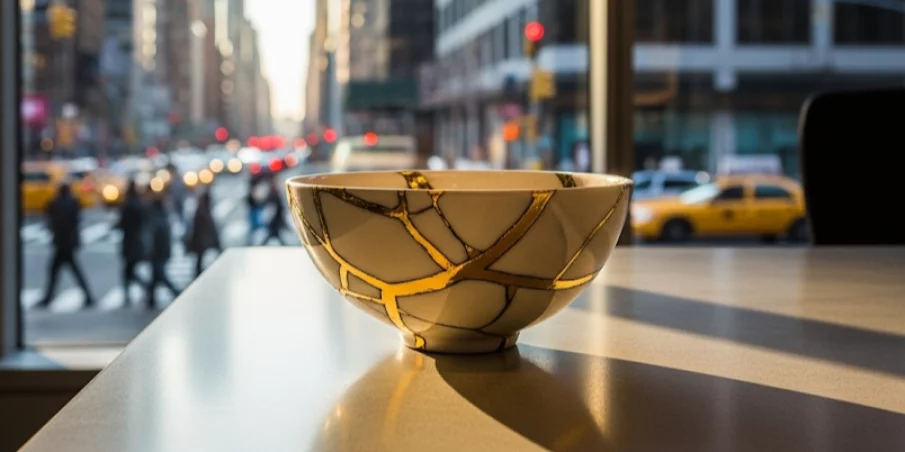
These days, Kintsugi isn’t confined to museums or tea rooms. It’s popping up in all sorts of places. Japan art news regularly highlights new shows and artists using Kintsugi.
Art and Design
Artists incorporate it into contemporary works, like sculptures where breaks are intentional for dramatic effect. Jewelry designers draw inspiration, creating pieces with golden “cracks” in metal. Even in home decor, Kintsugi-style repairs turn ordinary items into art. Think about a vase on your shelf, its golden lines telling a story of survival.
Therapy and Mindfulness
In therapy and self-help circles, Kintsugi serves as a metaphor for healing emotional wounds. Workshops teach the technique while discussing personal growth, blending craft with reflection. It’s empowering to see something broken become whole again. Restaurants sometimes use Kintsugi pottery for serving, adding a touch of elegance and history to meals. This art bridges old and new, showing how traditions evolve without losing their essence.
Eco-Friendly Living
For everyday folks, Kintsugi encourages mindful consumption. Repairing instead of replacing reduces waste, aligning with eco-friendly living. A mended bowl might hold your morning cereal, its golden seams a daily reminder of resilience. It’s accessible too. Online tutorials and kits let anyone experiment, democratizing this once-elite practice.
Trying Kintsugi Yourself: A Beginner’s Guide
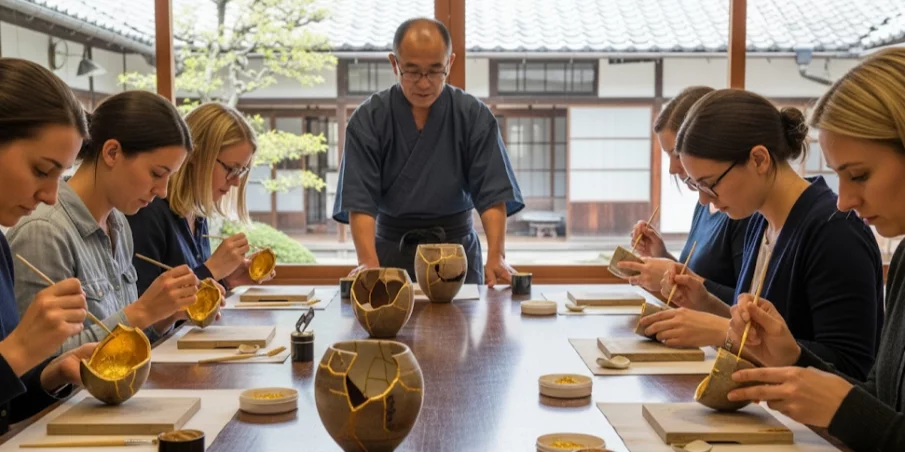
If you’re itching to try Kintsugi, start small with a chipped cup or plate. Grab a DIY kit with epoxy and gold powder. They’re user-friendly and forgiving. Break out the pieces carefully, clean them, and mix your adhesive. Join them, let it set, then add the gold touch. Mistakes? They’re part of the process. Sand and retry.
Practice on inexpensive items first to build confidence. Watch videos for visual tips, but remember, your version doesn’t need to be perfect. The joy comes from the act of creation. Once done, use your piece proudly. It’s now uniquely yours. Sharing the result with friends can spark great conversations about life’s imperfections.
As you work, reflect on what the breaks represent. Maybe it’s a metaphor for a recent setback. Kintsugi transforms that into strength, one golden line at a time.
Frequently Asked Questions About Kintsugi
What are the different types of kintsugi?
Kintsugi comes in a few main styles, each suited to different kinds of breaks. The crack method (hibi) is the simplest, using gold-dusted lacquer to fill fine lines without missing pieces. The piece method (kake no kintsugi) handles larger breaks by rebuilding with lacquer putty before adding gold. Joint-call (yobitsugi) replaces missing shards with fragments from other ceramics, creating a patchwork effect. Variations also include using silver or platinum instead of gold, and modern adaptations swap traditional urushi lacquer for epoxy resin for easier home use. Finishing techniques like keshi-fun (matte gold) or maru-fun (shiny round particles) add unique textures.
Can kintsugi be done at home?
Absolutely, you can try kintsugi at home with beginner-friendly DIY kits that use epoxy resin and gold powder instead of traditional materials, making it safer and quicker without needing special curing environments. Start with a simple broken mug or plate, follow online tutorials for step-by-step guidance, and gather basics like gloves and sandpaper. While authentic urushi-based kintsugi requires more skill and time, modern versions let anyone experiment, turning it into a relaxing craft project that celebrates imperfections right in your kitchen.
What is the symbolism of kintsugi?
Kintsugi symbolizes embracing life's imperfections and finding beauty in brokenness, drawing from the Japanese philosophy of wabi-sabi, which values transience and authenticity. The golden seams represent resilience and healing, showing that scars from challenges can make something stronger and more unique rather than diminished. It's often used as a metaphor for personal growth, reminding us that adversity, like a broken pot, isn't something to hide but to highlight, promoting ideas of acceptance, mindfulness, and the idea that our histories add depth and value.
How is kintsugi performed?
Kintsugi starts by cleaning the broken pieces thoroughly, then mixing urushi lacquer with flour to create a putty for joining shards like a puzzle. After aligning and clamping, it cures in a humid environment for days or weeks. Once set, excess is sanded smooth, layers of colored lacquer are applied, and gold powder is dusted or mixed in for the final shine, followed by polishing. Modern methods use epoxy for faster bonding, but the key is patience and precision to transform flaws into features.
What are the materials used in kintsugi?
Traditional kintsugi relies on urushi lacquer (raw, red, black, or bengara types) as the base adhesive, mixed with rice or wheat flour for putty, and dusted with pure gold, silver, or platinum powder for the metallic veins. Other essentials include tonoko (clay powder) for filling, wood or hemp fibers for structure, brushes, spatulas, sandpaper for smoothing, and polishing tools like charcoal. Modern kits often substitute epoxy resin and mica powders for safety and ease, plus gloves for handling irritants.
What is the difference between traditional and modern kintsugi?
Traditional kintsugi uses natural urushi lacquer, which requires long curing times and can irritate skin, resulting in food-safe, durable repairs that honor ancient techniques. Modern kintsugi opts for synthetic epoxy glues mixed with gold mica, making it quicker, beginner-friendly, and less hazardous, though it may not be as authentic or long-lasting. Both highlight breaks with metallic accents, but the choice depends on whether you prioritize tradition or convenience.
Is kintsugi food-safe?
Yes, traditional kintsugi done with urushi lacquer and real gold is food-safe once fully cured, as urushi hardens into a non-toxic surface suitable for dishes. However, modern versions using epoxy might not be, so check your kit's instructions—opt for food-grade epoxy if you plan to use the repaired item for eating or drinking. Always test and avoid microwaving or dishwashing to preserve the repair.
In Closing
Kintsugi shows us that breakage isn’t the end. It’s a chance for renewal. By embracing our cracks, we find deeper beauty in ourselves and our surroundings. This art from Japan invites a kinder view of the world, where history enriches rather than diminishes. Next time something breaks, consider Kintsugi. It might just mend more than pottery.
More to Read:
Previous Posts:
Next Posts: