Interview with Kosuke Nagata: Exploring the Shape of Narrative Between Logic and Chance (Text by Ryohei Nakajima)
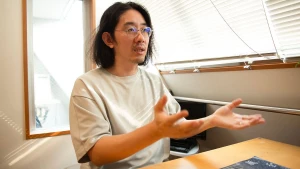
 Artist Kosuke Nagata, who works across video, photography, performance, and installation, discusses his artistic journey and the development of his video essay style ahead of the screening series "Fire in Water: Kosuke Nagata Video Works Collection."
Summary
Kosuke Nagata, an artist born in 1990 in Aichi Prefecture and based in Kanagawa Prefecture, works across video, photography, performance, and installation. His practice explores binary oppositions underlying modern thought—such as self and other, nature and culture, body and environment—as well as the ambiguities hidden within them. Starting from everyday activities like eating, translation, and fermentation, he continuously questions how humans relate to the world. In recent years, he has presented topics such as the formation of national identity in food culture, bodily techniques and power relations in dining etiquette, and the management of living organisms in food production, through video essays and course-meal-format performances.
His major exhibitions include "Aichi Triennale 2019: Taming Y/Our Passion" (2019), "Seeing is Touching: Emerging Japanese Artists Vol. 19" (Tokyo Photographic Art Museum, 2022), "Becoming Stray" (Towada Art Center, 2024), and "Ebisu Film Festival 2025: Docs—This is an Image—" (2025). Following his participation in Aichi Triennale 2019, Nagata began presenting video works in an art context. A special screening series, "Fire in Water: Kosuke Nagata Video Works Collection," featuring six of his representative works, will begin at Pole Pole Higashi-Nakano on August 22 and travel to movie theaters across the country.
In the interview, Nagata discusses the origins of the style seen in his first two video works, "Translation Zone" (2019) and "Purée" (2020), which feature flatly read essay-like narration accompanied by imagery. After studying architecture at an art university and working in an engineering lab, he eventually moved into sculpture, photography, and finally video. When invited to participate in Aichi Triennale, he compiled accumulated notes on food into a lengthy essay, then, unable to find a way to present it as an artwork, resorted to reading the essay aloud over accompanying footage. He notes that despite the high information density of "Translation Zone," the imagery of cooking allows viewers to engage in internal dialogue and reflection, creating productive spaces of ambiguity within the work.
(Source:Tokyo Art Beat)