Who Was Kumi Sugai? An Interview with Art Historian Yutaka Hayami
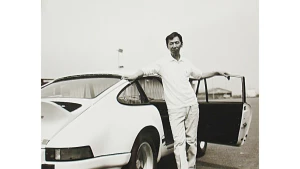
 Art historian Yutaka Hayami discusses the life and work of postwar painter Kumi Sugai, who thrived in Paris.
Summary
This article features an interview with 20th-century art historian Yutaka Hayami about the painter Kumi Sugai. Born in Kobe, Sugai faced a difficult childhood after his parents divorced, but developed a love for drawing and attended art school before dropping out. He worked at Hankyu Railway as a poster designer, gaining recognition, but aspired to be a painter. He studied under Japanese-style painter Teii Nakamura and Gutai founder Jiro Yoshihara, yet struggled to establish himself. In 1952, he moved to Paris for economic reasons. There, he avoided the Japanese artist community and pursued an independent style. Initially influenced by Paul Klee, his early works featured delicate textures and primitive motifs, quickly attracting collectors. In the late 1950s, his style evolved to large-scale compositions with thick black lines resembling calligraphy or crests, which critics associated with Oriental calligraphy. Although he exhibited with Tsuguharu Foujita in London, they had little direct interaction. Sugai remained fiercely independent, as reflected in his statement, "There is no Sugai before me, and there will be no Sugai after me, therefore I paint."
(Source:美術手帖)