Takashima Yasushi | Kyoto's Hot Summer 2026 Dance Performance "Jérôme Bel" (Part 1)
 Summary
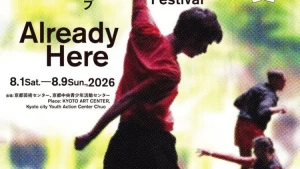
This article is the first part of a review of the dance performance "Jérôme Bel," held on August 5, 2026, at the Kyoto Art Center Auditorium. It is a two-hour lecture-performance by French choreographer Jérôme Bel, in which he looks back on his approximately 30-year career and life, explains his works while showing video, and discusses the questions about dance and society behind his creations. Since 2019, out of consideration for the environmental impact, Bel and his company have stopped traveling by air, and instead local performers perform in the local language at each venue. In the Japanese version, Takao Kawaguchi appears as "Jérôme Bel" and speaks in Japanese. The article outlines the trajectory of Bel's thought. In his late teens, he entered the National Dance School but was disappointed that it was merely an institution for training obedient dancers. He was encouraged by Pina Bausch's stage, and contemporary dance flourished in the 1980s under the progressive left-wing government of President Mitterrand. After losing two close friends to AIDS, he decided to become a choreographer. As training to become a choreographer, he spent two years reading art history, literature, philosophy, etc., replacing the words "art" and "literature" with "dance" to forge a framework of thought that questions "dance." In his early work "Jérôme Bel" (1995), a completely naked dancer pinches his own skin and urinates, treating the body in a literal dimension. In his representative work "The Show Must Go On" (2001), he treats pop song lyrics as a "choreographic score," and dancers perform the actions indicated by the lyrics only when those lyrics are played, revealing the arbitrariness and power of choreography. Since the 2000s, following a commission from the Paris Opera Ballet, he has worked on a series of "documentary portraits" in which dancers narrate their autobiographies, highlighting the hierarchy of ballet and the state power behind it. In the 2010s, commissioned by an organization for people with intellectual disabilities, he created "Disabled Theater," presenting the stage as a place for liberation from the choreographer's privilege and for dismantling social norms. In "Gala" (2015) with diverse performers, he fluidized the boundary between solo and group dance. Then, triggered by a biographical work about Isadora Duncan, he came to create this work "Jérôme Bel," in which he talks about himself. In this work, a device is added: Takao Kawaguchi speaks in Japanese as "Jérôme Bel" instead of Bel himself. The structure of "another person, not the author, narrating the choreographer's autobiography" furthers questions about choreography itself, as well as the repetitiveness and reproducibility of dance (performing arts), and the issue of video archives and the uniqueness of live performing arts. The second part will detail the "substitution by others."
(Source:artscape)