"Seed and Root: How to Cultivate the City" (Tokyo Opera City Art Gallery) Opening Report: How to Live with Nature in the City
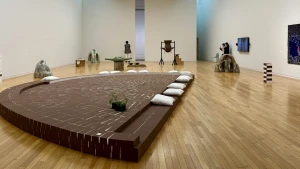
 The group exhibition "Seed and Root: How to Cultivate the City" has opened at Tokyo Opera City Art Gallery, exploring the relationship between city dwellers and nature.
Summary
"Seed and Root: How to Cultivate the City" has opened at Tokyo Opera City Art Gallery in Hatsudai, Tokyo, and runs until December 20. Curated by the museum's curators Yoko Nose, Nao Fukushima and Hana Takigami, the group exhibition reexamines the relationship between urban residents and the natural environment. Ten artists active in different fields such as contemporary art, architecture and fashion participate, presenting works with new pieces on themes of plants, soil, water, ecosystems and circulation. Nose explained that the title "Seed and Root" carries various meanings, not only plants and the natural environment but also human migration and transformation, identity and roots, and the process by which seeds of creation take root and develop. She also emphasized that the exhibition does not deal only with the beauty of nature. The participating artists explore relationships with nature starting from familiar activities such as eating, excreting and dwelling, and the works include issues such as predator-prey relationships between organisms, environments altered by humans, and loss of land. In the venue, works by the ten artists are loosely connected like a communal urban vegetable garden or a garden where various plants coexist. Yuriko Asano has investigated the relationship between plants and people's lives in various places and made paintings of wisdom and memories inherited by the land. For this exhibition she created "The Work of Fallen Fruit" (2026), featuring the yamamomo, which is also planted around Tokyo Opera City. While in the city fallen fruit is treated as something that soils the ground and clothing, in some regions it has been enjoyed as seasonal food. Asano focuses on these different human gazes toward plants. The work also depicts the complex ecology of the inubiwa fig and the inubiwa wasp that pollinates it, highlighting relationships in the natural world that cannot be completed by humans alone. Fumi Imamura creates a world of non-existent flowers by cutting out and collaging watercolor-painted flowers. "Warm House" is a reconstruction of a work made in 2015 after about ten years. The starting point was the sense of security felt inside the body, like a mother's womb, when surrounded by red flowers. Yoko Tsuwabara observes plants and animals living in the gaps of the city and develops the emotions arising from them into textile works using tufting. In this exhibition, she also presents a new work in which she continues to knit yarn dyed with onion skins from daily meals. The density, length and color differences of the stitches record her mental state and the time of her daily life. Hatsune Suzuki linked growing plants with painting production. She took the pith from the stems of yacon she cultivated for food, crushed and dried it to make a support, and draws on it by applying heat to scorch it, also using river sand and lime made from oyster shells as painting materials. In this exhibition, she composed the space with works evoking aquatic organisms and plants. Suzuki's practice of transforming plants she grows into materials for painting conveys a sense that living and creating are continuous.
(Source:美術手帖)