"Mariko Mori: Flash of Light" (Mori Art Museum) Opening Report: Mariko Mori's First Major Solo Exhibition in Japan in 24 Years
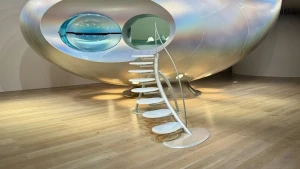
 Mariko Mori's first major solo exhibition in Japan in 24 years, "Mariko Mori: Flash of Light," opens at the Mori Art Museum, showcasing over 30 years of her work in about 40 pieces.
Summary
"Mariko Mori: Flash of Light" opened on October 31 at the Mori Art Museum in Roppongi, Tokyo, and runs until March 28, 2027. The exhibition is a major solo show presenting over 30 years of work by contemporary artist Mariko Mori (b. 1967) through approximately 40 works, and is her first large-scale solo exhibition in Japan in 24 years since "Mariko Mori: Pure Land" at the Museum of Contemporary Art Tokyo in 2002. It traces her diverse practice from early photographs and videos to interactive installations using CG and brainwaves, sculptural works inspired by ancient civilizations and nature worship, and recent public art projects. The exhibition is curated by Mori Art Museum Director Mami Kataoka and Alexandra Munroe, Senior Curator at Large at the Solomon R. Guggenheim Museum and Foundation. It is organized into four sections: "Star Birth," "Connected World," "Ancient Memory," and "Oneness with Nature." At the press conference ahead of the opening, Kataoka emphasized the significance of looking back on Mori's practice when considering the role art and museums can play in a world increasingly divided. Munroe positioned Mori's expression as "metaphysical pop" and described the exhibition as a reevaluation within contemporary art history of an activity that has crossed pop culture, technology, science, and spirituality. The title "Flash of Light" symbolizes the "light" that repeatedly appears in Mori's works, and the venue, through curving white walls, soft lighting, and electronic music by Ken Ikeda, links individual works into a single large spatial experience. The display begins with the early "Cyborg" series, and through works such as "Play with Me" (1994), "Subway" (1994), and "Birth of a Star" (1995), reveals a critical perspective on female representation and consumption behind popular culture imagery. Mori's interest later expanded to Buddhist views of life and death and the cosmos, producing works such as "Miko no Inori" (1996), "Kumano" (1997), the "Esoteric Cosmos" series (1996-98), and "Pure Land." "Nirvana," which won a special prize at the 1997 Venice Biennale, engages multiple senses by incorporating wind and fragrance in addition to 3D imagery. Kataoka notes that Mori has actively incorporated the latest technology since the 1990s while "pursuing spatial experiences that go beyond two-dimensional works."
(Source:美術手帖)