Makoto Murata | Art Stroll 13: Murals, Murals, and Construction Fence Art
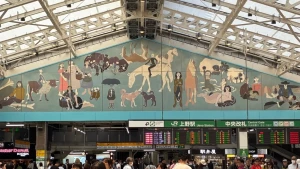
 An exploration of the evolution from traditional murals to murals and construction fence art in Japan.
Summary
This article explores the evolution of public art in Japan, tracing the transition from monumental murals to street-style murals and temporary construction fence art.
Starting with the restoration of iconic works like Genichiro Kitamura's "Freedom" at Ueno Station and Taro Okamoto's "Myth of Tomorrow" in Shibuya, the author examines how public art has adapted to urban changes. While traditional murals were often integrated into architecture, modern murals often emerge from graffiti culture, serving as a way to beautify urban spaces and prevent illegal graffiti.
The author also discusses the rise of "construction fence art," where artworks are printed on temporary barriers during urban redevelopment. This trend reflects a shift toward more ephemeral, lightweight art forms. Concluding with a tribute to Loco Satoshi, a pioneer of Japanese graffiti in Yokohama, the author reflects on how, despite the decreasing lifespan and physical weight of these works, their content must remain profound.
(Source:artscape)