History, Culture, Ethnicity — What I Thought About in Estonia [Serial: Passages #2] (Text: Hiroyuki Yamamoto)
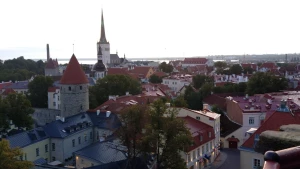
 A Japanese cultural researcher's essay on Estonia, examining the interplay of history, culture, and ethnic identity.
Summary
Cultural researcher Hiroyuki Yamamoto spent a week in Estonia for a university exchange, visiting the Estonian Entrepreneurship University of Applied Sciences (EUAS) in Tallinn. Estonia, a small nation of about 1.35 million people, has been repeatedly invaded and ruled by foreign powers — Denmark, Sweden, and Russia — since the 13th century, a history Yamamoto compares to that of Taiwan. Since regaining independence in 1991, Estonia has invested heavily in IT, with Tallinn pursuing smart city initiatives. Yamamoto highlights how culture carries a power of resistance, citing the "Singing Revolution" of the late 1980s, when Estonians gathered to sing folk songs in protest against Soviet rule. During two days of free time, he visited museums including The Vabamu Museum of Occupations and Freedom, which documents Estonia's history of occupation, and the Estonian National Museum in Tartu, designed by a team led by Hideo Gunma, which boldly incorporates an old military runway. These cultural institutions play a crucial role in shaping ethnic identity, yet they are not built on exclusionary ethnocentrism — protest banners against Russia's invasion of Ukraine stand before the Russian embassy near Yamamoto's hotel. He also notes that while English is widely spoken in Estonia, efforts to preserve the Estonian language through increased school instruction are underway. The essay concludes with the author reflecting on the need for work-life balance as a new semester begins.
(Source:Tokyo Art Beat)