"Maruyama Okyo: Beyond the Real — Spatial Revolution" Held at Edo-Tokyo Museum: Tracing His Career from Early to Late Period
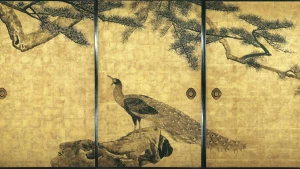
 A special exhibition tracing Maruyama Okyo's career from early to late period with over 120 works opens at Edo-Tokyo Museum.
Summary
A special exhibition commemorating the renewal of the Edo-Tokyo Museum, "Maruyama Okyo: Beyond the Real — Spatial Revolution," will run from November 28 to January 24, 2027. It presents over 120 works spanning the early to late career of Maruyama Okyo (1733–95), a painter of the late Edo period and founder of the Maruyama school. The curator is Park Mi-hui, a curator at the museum. After the exhibition, it will travel to the Osaka City Museum of Fine Arts.
Okyo was born into a farming family in Aono Village, Kuwata District, Tanba Province (present-day Kameoka, Kyoto). He went to Kyoto in his teens to study painting, trained under various schools including the Kano school and the style of Shen Nanpin, and established his own style emphasizing sketching from life. He had many disciples and produced numerous wall paintings, including the National Treasure "Snow-Covered Pine Trees" (ca. 1786) and sliding door paintings at Daijo-ji Temple in Hyogo, laying a foundation for modern Japanese painting. The exhibition repositions Okyo not merely as a painter who emphasized sketching, but as an artist who attempted expression beyond the "real," representing the world through atmosphere, time, and space.
The exhibition is organized into five chapters. Chapter 1, "The Birth of the Painter Okyo," introduces his early career and his work with megane-e (peepshow pictures). Chapter 2, "Meiwa," traces the period after he began calling himself Okyo, showing works that reveal his turn toward sketching. Chapter 3, "An'ei," presents works from the era when he gained the patronage of Kyoto's wealthy merchants, including the Mitsui family, and features the "Tiger" (1780) returning from the Sainsbury Centre for Visual Arts.
(Source:美術手帖)