[Part 2] From Mingei to Sato-gei: Art and Architecture Considered from Post-Expo Kameoka. A Review of Kyoto's "ART PARK PROGRAM" (Review by Manabu Miki)
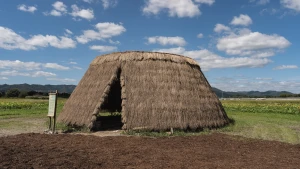
 Manabu Miki reviews Kyoto's "ART PARK PROGRAM" from a post-Expo perspective, discussing the outdoor art exhibition "Art Sprout" and architect Hiroshi Ono's works.
Summary
This is the second part of art critic Manabu Miki's review of the outdoor art event "ART PARK PROGRAM," held at Kameoka Hozukyo Park in Kyoto from September 18 to November 8, interpreted from a "post-Expo" perspective. Following the first part, it discusses the art exhibition "Art Sprout" and the bamboo-and-rice-straw works by architect Hiroshi Ono. Under the theme "unearth," seven selected from 146 nationwide entries excavate air, underground life, land memory, and human-creature relationships. Yō Ueda's "4 Airs" and the collective Kokyū's "Be-re-earth" use Kameoka's air; Yuka Nishihisamatsu's "Web of Life" sculpts mycelium and cordyceps in ceramic; Ryō Asada's "Accumulation" uses dry lacquer for an imaginary skeleton, incorporating fading as part of the work. yamfum studio × ReLink's "Kasumi Pond" assembles old glass into a circular structure; Nazuna Ōkawa's "Selection" carves Kameoka cattle; and the duo Hisei's "THE WALL WE SHARE" fuses bouldering, painting, and dialogue with locals. The seven works cross traditional media and techniques—painting, wood sculpture, ceramics, lacquer, bamboo craft, and glass—and their outdoor presentation opens the possibility of not limiting exhibition sites. What was unearthed were also art techniques themselves.
(Source:Tokyo Art Beat)