Yuu Tsukada | Kokoro Watanabe's "Kimi to Watashi"
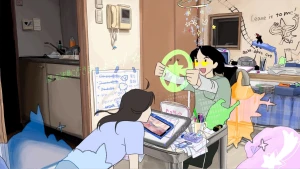
 Kokoro Watanabe's "Kimi to Watashi" is an animation depicting Gen Z's media experience and return to the self.
Summary
This article is Yuu Tsukada's review of Kokoro Watanabe's animated film "Kimi to Watashi" (2026). The work centers on the "birth pangs" of a student named Kokoro struggling with animation production, positioning it in a lineage of existential conflict alongside Dostoevsky, Van Gogh, and "Look Back." The text and symbols on screen are typed in sync with dialogue and laid out along the background's perspective, functioning not as mere gimmicks but as devices that sequentially express the characters' emotions. Born in 2003, Watanabe belongs to Gen Z, and through motifs such as flip-phone email screens, LINE, X, Instagram, and instant cameras, the film meticulously depicts teenagers' media experiences. In particular, a scene of photographing a flip-phone screen with a smartphone to post on Instagram Stories symbolizes the Gen Z "crisis" of past memories becoming inaccessible as devices change. Midway through, it is revealed that Renge is Kokoro's imaginary friend, highlighting the fact that the device producing media as an object constantly returns to the self, skillfully incorporating into the storytelling the general property of media that structures identity as a closed circuit. The work gains its strength as a film through the strong bond between this theme and its typography.
(Source:artscape)