Isaac Chong Wai and Chen Qiulin: Tracing the History of China Through Body and Memory
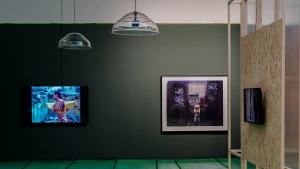
 The exhibitions of Isaac Chong Wai and Chen Qiulin are read through the lens of Peking opera "Farewell My Concubine," exploring Chinese history, body, and memory.
Summary
This article recounts visits to two exhibitions: "An Intimate Surrender" by Isaac Chong Wai at Tai Kwun Contemporary in Hong Kong (curated by Louisa Ho) and "Heartland (花園)" by Chen Qiulin (陈秋林) at the Pingshan District Art Museum in Shenzhen, hosted by A Thousand Plateaus Art Space. Both exhibitions share the Peking opera classic "Farewell My Concubine" (霸王别姬) as a common starting point.
Isaac Chong Wai, a Hong Kong-born, Berlin-based artist who represented at the 60th Venice Biennale in 2024, creates performances, video, installation, photography, and drawing. In his exhibition, multiple performers touch, support, and repetitively move together, evoking intimacy as well as tension and power relations between bodies. Referencing the Peking opera tradition of "nandan (男旦)" — male actors performing female roles — Chong Wai interrogates gender performativity, queer embodiment, and the fluidity of Asian masculinity. The 1993 film "Farewell My Concubine" directed by Chen Kaige portrays the protagonist Cheng Dieyi, trained from childhood as a dan (旦) role performer who continues to play Consort Yu on stage. The film unfolds against the turbulent backdrop of modern Chinese history — from the fall of the Qing Dynasty through the Republic of China, the Sino-Japanese War, the founding of the People's Republic, and the Cultural Revolution — blurring the boundary between role and self, performance and reality.
At Chen Qiulin's "Heartland" exhibition in Shenzhen, the motif of "Farewell My Concubine" reappears. Chen's practice also interrogates Chinese history through themes of body, memory, and gender, resonating with Chong Wai's engagement with Peking opera. Through the different media of stage art, film, and embodied performance, both exhibitions illuminate the process by which performed bodies and historical reality become inseparable.
(Source:美術手帖)