Mari Tsukamoto | Between International Exhibitions and the City — Walking Through Pittsburgh's Carnegie International
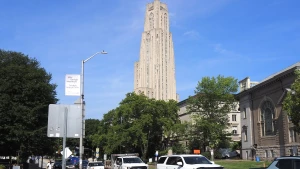
 A curator from Kochi visits Pittsburgh's historic Carnegie International to explore the relationship between global art and local communities.
Summary
The author, a curator at the Kochi Prefectural Museum of Art specializing in Japanese contemporary art, recounts a visit to Pittsburgh, Pennsylvania, driven by a new connection with the U.S. art scene. The focus is the 59th Carnegie International, the oldest North American international exhibition, held since 1896. The author aims to understand how a long-running international art fair interacts with the life of a non-metropolitan city and whether such events create lasting local engagement.
The exhibition, titled "If the word we," features 61 artist collectives from around the world. It frames "we" not as a fixed group but as a complex, open relationship. The curation highlights works from indigenous communities, China, and Brazil alongside Japanese artists like Rena Sugihara and the Sogetsu school of ikebana. Key themes include migration, colonialism, and community. A unique aspect is how the temporary exhibition is interspersed with the museum's permanent collection, creating a distinct curatorial dialogue.
The author also examines Pittsburgh's art scene, noting that despite major institutions like the Carnegie Museum and The Andy Warhol Museum, commercial galleries for contemporary art are scarce. Interviews with gallery owners reveal that while the Carnegie International brings a surge of energy, the challenge lies in sustaining it between editions. This experience leads the author to reflect on similar issues faced by regional art scenes in Japan, where the influx of an international event does not automatically equate to a sustainable local art ecosystem.
(Source:artscape)