Reading the Biblical World Through Images [Part 1: First Half]: Tracing 100 Years of Christian Art in Japan
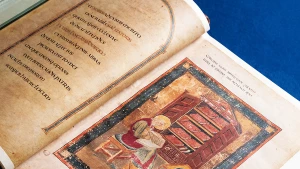
 The first installment of a series exploring 100 years of Christian art research in Japan through biblical narratives and imagery.
Summary
This article is the first half of the inaugural installment of the series "Reading the Biblical World Through Images," which uses biblical narratives and the imagery born from them as keys to interpreting Western art. Written by a scholar of Christian art at Rikkyo University, it guides readers through the rich world of Christian art based on a century of research cultivated in Japan.
The encounter between Christian art and Japan dates back to the mid-16th century with the arrival of Nanban culture. In 1549, with Francis Xavier's arrival, images of the Virgin and Child and devotional prints were brought to Japan, but public Christian art disappeared under the ban on Christianity. When the ban was lifted in 1873, Western Christian culture flowed back into Japan, and Christian art was introduced through the missionary work of Roman Catholic, Protestant, and Eastern Orthodox denominations. For example, Nikolai of the Eastern Orthodox Church (1836–1912) transmitted icon-painting techniques to Japan, and in 1881 the female painter Yamashita Rin (1857–1939) is known to have studied icon production seriously at a women's monastery in St. Petersburg, Imperial Russia.
In modern Japan, the reception of Christian art was largely limited to practical missionary activities such as church construction and decoration, and almost no one studied it systematically as art history. Against this backdrop, the first person to seriously introduce Christian art in Japan was Yashiro Yukio (1890–1975) with his 1927 publication "The Annunciation." Having gained international recognition as a scholar of Italian Renaissance art, Yashiro published this book after returning from study in Europe; it was a groundbreaking attempt to explore a single Christian theme from an art-historical perspective. An amusing anecdote remains that at the time of publication, the term "Annunciation" was not understood and was mistaken for "determining the sex of the fetus," but the fact that the term is widely used today shows the excellent linguistic sense of the researchers of that era.
The article also introduces the facsimile edition of the "Codex Amiatinus" (the only copy in Japan, held by Rikkyo University Library) and photographs of the red-brick school buildings (including Morris Hall) completed in 1919. The series aims to explore anew the world woven by the Bible and art through the study of Christian art, which has fostered a 100-year tradition in Japan.
(Source:家庭画報)