Report on the Opening of "30 Years After His Death: Toshio Sugai" (Hiroshima Prefectural Art Museum): Exploring the Art and Personality of Sugai, Who Ran in Pursuit of "Art of the Future"
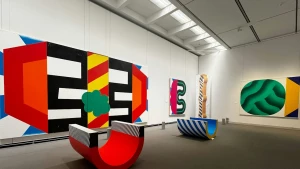
 A retrospective of Toshio Sugai opens at Hiroshima Prefectural Art Museum, exploring his lifelong pursuit of "art of the future" and his personality.
Summary
The Hiroshima Prefectural Art Museum has opened the retrospective exhibition "30 Years After His Death: Toshio Sugai" featuring the artist Toshio Sugai (1919–1996), who was based in postwar Paris and achieved international acclaim. The exhibition runs until December 6 and is curated by Noritaka Tsunota of the museum. Sugai began his career as a designer for Hankyu Railway, then moved to France in 1952, quickly gaining attention in the Paris art world for abstract paintings with an Oriental sensibility. He continued to boldly transform his style—from series based on the sun and his initial "S" to geometric works that eliminated texture entirely—always pursuing "art of the future." The exhibition consists of a prologue, four chapters, and an epilogue, showing works from his early designer days to his later years, along with valuable private materials such as design sketches, everyday objects, and photographs, accompanied by columns from people connected to him. The prologue introduces posters from his Hankyu days, revealing his origins in seeking free expression under wartime constraints. Chapter 1 traces his path after leaving Hankyu, when he was inspired by American abstract art through magazines and moved to France, experiencing his first solo show at the renowned Galerie Kléber within two years. While initially praised as "Japanese" or "Oriental" for his poetic soft-abstract style, he felt uncomfortable with such labels and moved toward the hard-edge expression seen in his later masterpieces. His works reflect the era, with titles referencing the space race, and his favorite "Umibozu" shape—inspired by overlapping slices of ham—reappears in many pieces, revealing his personality even at the start of the exhibition.
(Source:美術手帖)