Riku Yamakawa | "Somewhere in Time" (Part 1)
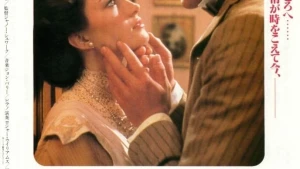
 A critical essay revisiting "Somewhere in Time" after 11 years, examining the act of viewing and the film's hidden foreshadowing.
Summary
This article is the first part of a critical essay by Riku Yamakawa on the film "Somewhere in Time" (1981, directed by Jeannot Szwarc, based on Richard Matheson's novel). The author revisits the film after 11 years and discusses how the temporal and spatial separation between image and viewer, as well as changes in viewing environments, can rewrite the meaning of a film. The essay first divides the film into three parts—A: Encounter with the Pocket Watch, B: Journey to the Past, C: Abrupt Ending—and summarizes the plot. In 1972, aspiring screenwriter Richard receives a pocket watch from an elderly woman, Elise, who says "Come back to me." In 1980, struggling with writer's block, Richard stumbles upon the Grand Hotel, becomes fascinated by Elise's portrait, and researches her life. Learning that his mentor's book "Travels Through Time" was a favorite of Elise's later years, he attempts time travel. In 1912, the two unite, but Richard is returned to the present after seeing a modern coin. He can never return to 1912, and eventually, weakened, he reunites with Elise in his final moments. The latter half of the article discusses the foreshadowing that Rachmaninoff's "Rhapsody on a Theme of Paganini," which Richard hums on the lake, was actually composed in 1934 and did not exist in 1912. Elise learns the identity of the tune 20 years later and encounters "Travels Through Time" another 20 years after that. Furthermore, from the fact that Richard possessed the pocket watch, Elise realizes that it was her future self who gave it to him. The author argues that these foreshadowings only connect in the audience's mind after the film ends, and concludes that one must think in order to shed tears that only a privileged viewer can.
(Source:artscape)