Part 7: "Severed Bodies" [Professor Naoki Sato] Art Appreciation Lessons Taught at Tokyo Geidai: A New Art History through East-West Comparison - Sesshu's National Treasure "Huike Danbi-zu" and the Head of Holofernes
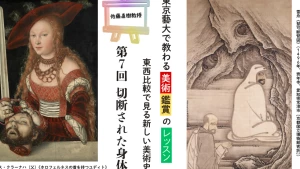
 Professor Naoki Sato compares Sesshu and Cranach to explain different depictions of "severed bodies" in Eastern and Western art.
Summary
In the seventh installment of his series, Professor Naoki Sato of Tokyo University of the Arts explores the theme of "severed bodies" by comparing works from the East and West. He examines Lucas Cranach the Elder's "Judith with the Head of Holofernes" alongside Sesshu's national treasure "Huike Danbi-zu" (Huike's Severed Arm).
Cranach's work utilizes grotesque, realistic depictions of the severed neck to emphasize the violence and the historical reality of the narrative. In contrast, Sesshu's depiction of the monk Huike is highly restrained; rather than focusing on physical pain, the artwork emphasizes the spiritual determination and resolve required in Zen practice.
Ultimately, the article concludes that while Cranach depicts severance as a "result of punishment" to prove a story, Sesshu treats the body as a "medium" for spiritual training, representing the "expression of resolve."
(Source:美術展ナビ)