Ako Sugie|Commemorating the Selection of DOCOMOMO Japan 300: "Modern Movement and Architecture Today"
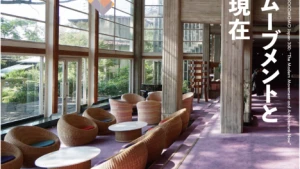
 An exhibition marking DOCOMOMO Japan's 300 selected works, presenting about 100 works in two phases.
Summary
Most buildings inscribed as UNESCO World Cultural Heritage are religious architecture, castles, palaces, fortresses, or historic cities and towns from ancient to early modern times; modern and contemporary architecture from the 20th century onward accounts for only a small fraction. UNESCO has flagged this imbalance and is now rapidly advancing new inscriptions of modern architecture. In this context, the activities of DOCOMOMO (Documentation and Conservation of buildings, sites and neighborhoods of the Modern Movement) are drawing attention. Founded in the Netherlands in 1988, DOCOMOMO has spread to 79 branches worldwide, and DOCOMOMO Japan was established in 2000. Together with the Architectural Institute of Japan, it selects "Buildings of the Modern Movement in Japan," records their historical and cultural value, and proposes preservation and adaptive reuse. This exhibition commemorates DOCOMOMO Japan's selection surpassing 300 works, presenting about 100 of them in two phases at the National Archives of Modern Architecture. Works by architects such as Kunio Maekawa, Junzo Sakakura, Kiyonori Kikutake, Togo Murano, Takamasa Yosizaka + U Research Studio, and Hiroshi Hara + Atelier Phi Architectural Research Institute are shown through photographs, video, and some models, offering a chance to view celebrated buildings mainly from the Showa era. The buildings are robust yet refined; some still exist, while others have unfortunately been demolished. Modern architecture a few to several decades old struggles to convey its cultural value to the public, but the expert listing of over 300 works can help spread awareness of the cultural value of Japan's modern architecture. This is an opportunity to see masterpieces that supported Japan's modernization and high economic growth. It runs in two parts: Part 1 "Value and Appeal" (Aug 29–Nov 23, 2026) and Part 2 "Inheritance and Utilization" (Dec 3, 2026–Feb 23, 2027).
(Source:artscape)