What Comes After the Image? Cinematic Broadcast and "Spatial Assets" Are Transforming Filming and Art Direction Vol.14 [IBC 2026] - PRONEWS: The Total Guide Where All Video Production Information Gathers
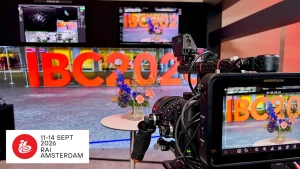
 IBC 2026 showcased capturing physical sets and locations as reusable "spatial assets" to transform video production and art design.
Summary
The article examines IBC 2026 exhibits through the lens of a new concept called "spatial assets" — capturing physical art sets, locations, and studios as reusable 3D data along with camera positions, lens information, and rights data for later re-shooting. Sony's XYN Spatial Capture converts real spaces into high-quality 3DCG assets usable as virtual production backgrounds, while camera tracking systems from Mo-Sys (StarTracker) and Sony (OCELLUS) synchronize real camera positions with digital environments, enabling captured spaces to be re-filmed. Zero Density demonstrated scanning environments using Reality 5 with Unreal Engine, Chaos Vantage, and NVIDIA Gaussian Splatting. OpenTrackIO, an open streaming protocol developed by SMPTE's RIS OSVP group, aims to improve interoperability across different systems. The IBC Accelerator's VooPla project creates production-accurate digital twins of broadcasting studios to support planning decisions before budgets and schedules are finalized. LED displays from ROE Visual and AOTO serve as devices that bring digitized spaces back before cameras as actual light and backgrounds. The article envisions a future "space archive" where locations can be searched by criteria like dimensions and equipment, similar to today's video archives, while noting that spaces require version management as they change over time. It argues that art direction is expanding from "build, shoot, destroy" to include "preserve, update, reuse," and that rights and creative management challenges remain. The article concludes that what video production leaves behind is expanding beyond finished video to include the spaces that produced it.
(Source:pronews.com)