"Utagawa Hiroshige: The Best Angles of Edo" (Tokyo National Museum) Report. Tracing Edo Dyed in Hiroshige Blue
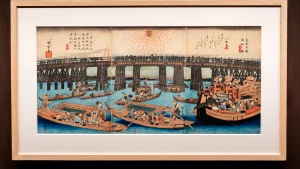
 A report on Tokyo National Museum's Hiroshige exhibition showcasing 1,025 works from the Uchida Shin collection.
Summary
A report on the special exhibition "Utagawa Hiroshige: The Best Angles of Edo" at Tokyo National Museum, running from September 29 to December 20. Held to mark the donation of 1,025 ukiyo-e prints from the collection of Uchida Shin, who left a significant mark on ukiyo-e research and promotion, the exhibition is divided into three periods, each presenting the complete sets of Hiroshige's three major series: "The Fifty-three Stations of the Tōkaidō" (Period 1: Sep 29–Oct 25), "The Sixty-nine Stations of the Kisokaidō" (Period 2: Oct 27–Nov 23), and "One Hundred Famous Views of Edo" (Period 3: Nov 25–Dec 20). This arrangement offers a rare opportunity to view each major series in its entirety. The first chapter introduces Hiroshige's early landscape works that marked his transition to landscape painting, such as "Famous Places of the Eastern Capital" (c. 1831), noting that while similar compositions had precedents in works by Utamaro and Hokusai, Hiroshige's bold compositions possess a distinctive lyricism. Hiroshige (1797–1858), born in Yashio Gashi (present-day Marunouchi), apprenticed under Utagawa Toyohiro in his mid-teens and initially created bijinga and yakusha-e before shifting his focus to landscape painting, achieving great success.
(Source:Tokyo Art Beat)