Report on the Opening of 'Kawai Gyokudo: Natsukashii Nihon no Joukei' (Yamasaki Museum of Fine Arts). Tracing Gyokudo's Career, Entrusting Nostalgia to Landscapes
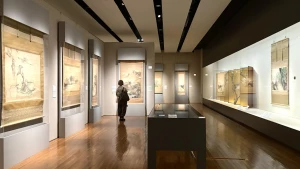
 The Yamasaki Museum of Fine Arts presents a special exhibition reviewing the career of Japanese painter Kawai Gyokudo, featuring his masterpieces depicting nostalgic Japanese landscapes.
Summary
The Yamasaki Museum of Fine Arts in Hiroo, Tokyo, opened in 1966 as Japan's first museum dedicated exclusively to Japanese painting. To commemorate its 60th anniversary, the museum is holding its first special exhibition, "Kawai Gyokudo: Natsukashii Nihon no Joukei" (Kawai Gyokudo: Nostalgic Japanese Landscapes), which reviews the career of the Japanese painter Kawai Gyokudo (1873-1957). The exhibition runs until July 26. The exhibition is curated by the museum's curator, Satomi Hayakawa, and supervised by Yamauchi Yuji, a professor at Meiji Gakuin University and an advisor to the museum's arts department. Gyokudo expanded new horizons from traditional landscape painting to modern landscape painting by basing his work on the Maruyama-Shijo school and incorporating the style of the Kano school. He played a central role in the Tokyo art world and was awarded the Order of Culture in 1940. He depicted the Japanese mountains and rivers, the four seasons of nature that have been considered the original landscapes of Japan, and the people living there with rich emotion. The founder of the museum, Yamasaki Shune (1893-1983), collected works while directly interacting with many painters. Shune was deeply attracted to Gyokudo's personality and was close enough to visit Gyokudo's residence. Thanks to this connection, the museum possesses 71 works by Gyokudo. This exhibition, centered on the museum's collection, offers a valuable opportunity to trace Gyokudo's career from his early period to his later years, alongside masterpieces such as his early representative work "Ukai" (1895) and "Kohaku Bai" (Red and White Plum Blossoms) (1919), which was born after his research into the Rinpa school.
(Source:美術手帖)