Report on 6 Recommended Exhibitions at KYOTOGRAPHIE Kyoto International Photography Festival 2026
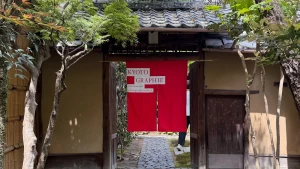
 This report highlights six standout exhibitions at the 2026 KYOTOGRAPHIE Kyoto International Photography Festival, themed ‘EDGE’, featuring 14 artists from eight countries.
Summary
The 2026 KYOTOGRAPHIE Kyoto International Photography Festival, marking its 14th edition, opened across various venues in Kyoto—from traditional町houses and temples to modern architecture—reinterpreting these spaces specifically for photography. Running until May 17, the festival has grown significantly since its inception in 2013, drawing over 300,000 visitors in 2024 and exceeding 2.1 million cumulative attendees, establishing itself as Asia’s leading photography festival. This year’s theme, ‘EDGE’, explores tension at critical junctures and instability at blurred boundaries, reflecting photography’s long-standing negotiation between documentation and artistry, truth and fiction. Among the 14 participating artist groups from eight countries, this report highlights six standout exhibitions. The first featured is by French photographic duo Yves Marchand and Romain Meffre, titled *The Shapes of What Remains*, held at the closed-to-the-public Shigennokaikan building (completed in 1930), adjacent to the Higashi Honganji Temple and overgrown with ivy. Their installation spans multiple floors: on the first floor, their *Theaters* series (2005–2021), gathered over 15 years, is projected in the Art Deco-style auditorium; underground, *Looking South from the Embankment, Gunkanjima* (2012) is shown; upper floors display a selection of past works; and the rooftop features additional installations. Marchand and Meffre began photographing ruins in 2002, at ages 21 and 15, drawn to abandoned sites in southern Paris. Their 2008 photo book *The Ruins of Detroit*—documenting post-industrial decline in Detroit—became a seminal work in contemporary ruin photography. In their new piece *Les Ruines de Kyoto* (2025), they employ generative AI to transform Kyoto into a desolate, post-apocalyptic landscape, directly referencing the 1871 photo album *Les Ruines de Paris* documenting Paris after the Paris Commune. Through this pairing of Paris and Kyoto as ‘post-end’ cities, they confront viewers with questions about impermanence, memory, and the evolving role of photography in the age of AI-generated imagery—inviting reflection on why humans are drawn to ruins, perhaps as mirrors of our own transience.
(Source:Tokyo Art Beat)