"Yoshida Shōya's Design: The Future Aspired to by the New Mingei Movement" (Panasonic Shiodome Museum of Art) Opening Report: Tracing the Design of the "Mother of Mingei"
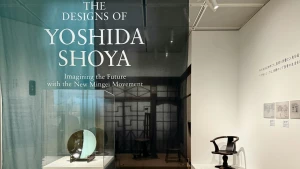
 The first Tokyo exhibition on Yoshida Shōya opens at Panasonic Shiodome Museum, showcasing about 300 works of the "Mother of Mingei".
Summary
The exhibition "Yoshida Shōya's Design: The Future Aspired to by the New Mingei Movement" opened on October 15 at the Panasonic Shiodome Museum of Art in Tokyo and runs until December 20. Curated by the museum's curator Kawakita Yuko, it is the first exhibition in Tokyo dedicated to Yoshida Shōya (1898–1972), who led the "New Mingei Movement" based in Tottori. Through approximately 300 works and related materials—including ceramics, wooden furniture, textiles, and metalwork—the exhibition highlights his multifaceted practice that extended to architecture, daily life culture, and regional environmental protection. While Muneyoshi Yanagi is widely known as the theorist of the Mingei movement, Yoshida's work, which translated those ideas into actual craft production and lifestyle culture, is less recognized. A native of Tottori and an otolaryngologist, Yoshida collaborated with local artisans to design crafts suited to modern life and established systems from production to sales. The potter Kawai Kanjirō, who called Yanagi the "father of Mingei," referred to Yoshida as the "mother of Mingei." At the press preview, museum director Shimaoka Kuniyasu noted the museum's focus on architecture, housing, and craft design, and expressed hope that visitors would "experience not only individual works but also the entire space and worldview into which they are integrated, with all five senses." The exhibition opens with the "Patient Examination Chair" (1952) and the "Green and Black Glazed Divided Plate" (1931), symbolizing Yoshida's activities. The former is a wooden chair with a high back and attached medical lighting, while the "Doctor's Chair with Wheels" (1952) features wooden wheels for mobility during examinations—both characterized by forms derived from medical function. The plate, a starting point of the New Mingei Movement that Yoshida began in Tottori in 1931, features a simple design dividing the surface into green and black glazes, using traditional glazes from Ushinoto ware. Curator Kawakita explains that Yoshida's designs are "very simple, refined, and crisp," and the chairs and plate reveal a common approach of unifying function with beauty of form.
(Source:美術手帖)