Koichi Kageyama | Unknown Artist, "Wall Painting from the Tomb of Queen Nefertari (Isis Leading the Queen)" — Eternal Life, Shoko Muraji
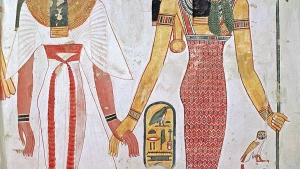
 An exploration of the tomb wall painting of Queen Nefertari, guided by Egyptologist Shoko Muraji.
Summary
This article examines the anonymous wall painting "Wall Painting from the Tomb of Queen Nefertari (Isis Leading the Queen)," created in the 13th century BCE, through an interview with Shoko Muraji, a researcher of ancient Egyptian wall paintings and hieroglyphs. Born in Tokyo in 1947, Muraji graduated from Toyo University and first visited Egypt in 1988, returning more than 30 times for research. The article details the painting's date, materials, size, composition, color, technique, and viewing points. The figures follow the principles of frontality and proportion, with faces shown in profile but eyes facing forward. Colors from natural mineral pigments—white, red, yellow, green, blue, and black—symbolize sacredness, activity, eternity, vitality, the cosmos, and rebirth, respectively. Hieroglyphs accompanying the scene declare Isis leading the queen into the afterlife and praise her titles. On the opposite south wall, a paired scene shows Horus leading the queen to the sun god and Hathor, together forming a dual proof of the queen's rebirth. The absence of Ramesses II indicates Nefertari's elevated status, allowing direct interaction with the gods. The article highlights the painting as a testament to ancient Egyptian beliefs in eternal life and sophisticated artistic achievement.
(Source:artscape)