Hoshino Futoshi | Shiraishi Yoshikazu "Brazilian Immigrants and Go-Shichi-Go: The Transcultural Development of International Haiku in Brazil"
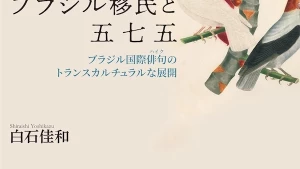
 This book examines the history of international haiku created by Brazilian immigrants and its development as "literary activity."
Summary
The book "Brazilian Immigrants and Go-Shichi-Go" explores how Japanese traditional haiku was received and transformed overseas, particularly in Brazil, from the perspective of "international haiku." It highlights the activities of Tsunekawa Masuda (1911-2008), a key figure who engaged in haiku activities in Brazil and compiled Japanese and Portuguese seasonal word collections. The text specifically details how the Portuguese seasonal word collection "NATUREZA" was compiled to suit the Brazilian climate and landscape. Furthermore, it delves into the activities of the haiku society "Grêmio Haikai Ipê," led by Masuda, and through its renga gatherings, discusses issues within the Japanese-Brazilian community and explores opportunities for "literature of the gathering" to cross borders. Ultimately, the book proposes a shift from traditional research focused on "works" to "literary activity" emphasizing "action," arguing that Brazilian international haiku demonstrates a transcultural development that transcends language and culture. The book itself is presented as an outcome born from the contact of different languages, cultures, and academic fields.
(Source:artscape)